




Appointments
Request Appointment/Request Exam - After completing the respective forms, these requests will be processed by our services, and you will receive confirmation by email. The indications about the Agreements (Insurance/Subsystem) are merely informative, please request confirmation in the "Observations" field.
Schedule Appointment/Exam myHPA - By accessing myHPA Saúde you can make the appointment in real time, directly on the Doctor's schedule according to his availability.
You can also contact us at +351 282 420 400 Algarve | +351 269 630 370 Alentejo | +351 291 003 300 Madeira
Phone booking/service hours:
Monday to Friday: 8:00 AM to 7:00 PM, Saturday: 8:00 AM to 5:00 PM Sunday and Holidays: Closed
(National landline)
Your request has been successfully received. We will confirm your appointment shortly.
Download myHPA Saúde:


Proctology
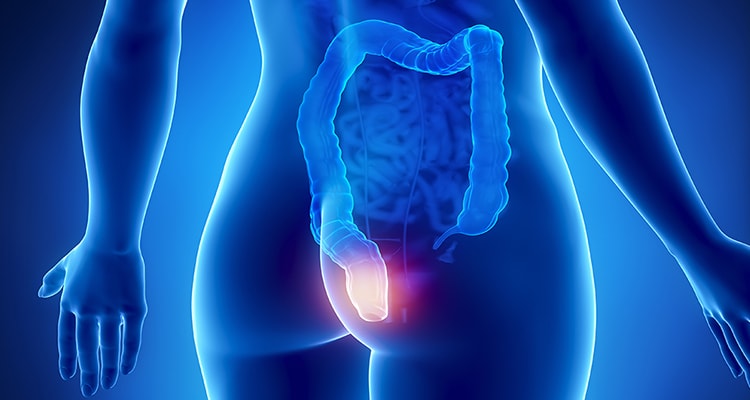
Proctology, also known as coloproctology, is the medical-surgical specialty dedicated to the diagnosis and treatment of diseases affecting the anal canal and perianal region, as well as functional disorders of the colon, rectum, and anus.
At the CUF | HPA Health Group, we assess all the most common symptoms, including rectal bleeding (haematochezia or rectorrhagia), anal pain (proctalgia), the presence of mucus or pus (proctorrhoea), itching, and changes in bowel movements such as dyssynergia or faecal incontinence.
The conditions typically treated are mostly benign, with particular focus on haemorrhoidal disease and anal fissures, which are highly prevalent among younger individuals. We also manage less common conditions such as perianal fistulas, anal fibromas, rectal prolapse (when the rectum telescopes towards the anal canal), faecal incontinence, and anal and perianal condylomas (for example, those associated with HPV infection).
Internal Haemorrhoidal Disease
Internal haemorrhoidal disease occurs due to congestion of the superior haemorrhoidal vessels, commonly triggered by straining during bowel movements, chronic constipation, increased intra-abdominal pressure, absence of valves in the haemorrhoidal vessels, prolonged standing, and genetic factors.
The most frequent symptom is the presence of bright red bleeding during or after defaecation.
The condition is classified into four grades, which guide the therapeutic approach:
- Grade I: bleeding only, without prolapse.
- Grade II: prolapse occurs but reduces spontaneously.
- Grade III: prolapse requires manual reduction.
- Grade IV: the prolapse is permanent and cannot be reduced, requiring surgery.
Treatment Options
The treatment of internal haemorrhoidal disease depends on its severity.
For Grades I to III, management can be performed in an outpatient setting using minimally invasive techniques, such as haemorrhoidal sclerotherapy or rubber band ligation.
In more advanced cases (Grade IV), where haemorrhoids remain prolapsed and are not reducible, surgical intervention is necessary — typically haemorrhoidectomy.
Anal Fissure
An anal fissure is a small, oval-shaped ulcer located, in most cases, in the lower portion of the anal canal. It causes intense, sharp anal pain, usually during bowel movements, and the discomfort can persist for several hours afterward. This severe pain often leads to fear of defaecation, resulting in constipation, which further worsens the condition.
This vicious cycle of pain, stool retention, poor blood flow, and impaired healing promotes the persistence of the fissure, making it essential to break this cycle to achieve recovery.
Anal Fistulas
Anal fistulas are abnormal tracts that connect the inside of the anal canal to the perianal skin, often developing as a consequence of previous anal abscesses. They typically present with an external opening and recurrent purulent drainage. These lesions may be simple or complex, requiring an individualised surgical approach based on an assessment of the fistula tract and the involvement of the anal sphincter.
Anal Fibromas
Anal fibromas are benign formations of fibrous tissue, often associated with inflammatory processes or chronic proctological conditions. Although usually asymptomatic, they may cause pain, discomfort, local inflammation, or difficulties with hygiene. In such cases, removal may be recommended, and it can be performed using minimally invasive techniques during a Proctology Consultation.
Anal and Perianal Condylomas
Anal and perianal condylomas are warty lesions that most often result from infection with the Human Papillomavirus (HPV), and can develop around or inside the anus. In addition to causing physical and aesthetic discomfort, these lesions should be treated early to prevent their progression and the risk of malignant transformation. Treatment is tailored to the location and extent of the lesions and may include topical, destructive, or surgical approaches.
At the Proctology Clinic of CUF | Grupo HPA Saúde, patients undergo a clinical evaluation based on symptom assessment and a detailed physical examination, which includes inspection of the anal and perianal region, digital rectal examination, and anoscopy. Based on the diagnosis obtained, an individualized therapeutic plan is developed, which may include conservative measures or specific procedures depending on the identified condition.
Technical Capabilities
We have the support of complementary technologies for diagnosis and follow-up, including:
- Colonoscopy
- Upper Digestive Endoscopy
- Abdominal Ultrasound
- CT Scan and Pelvic Tomography
- Anoscopy
- Rectosigmoidoscopy
- Laboratory Tests
The approach at CUF | Grupo HPA Saúde is distinguished by multidisciplinary integration and personalized care, incorporating collaboration with specialties such as Imaging, Pathology, Gastroenterology, and Anesthesiology.
We ensure follow-up in outpatient, inpatient, or emergency settings as needed, providing a continuous clinical pathway: diagnosis, treatment, and follow-up, minimizing complications and improving quality of life, well-being, and functionality.
If you are experiencing symptoms or have been diagnosed with one of these conditions, schedule a consultation with one of our specialists at CUF | Grupo HPA Saúde.
- Dra. Inês Guerreiro
- Dr. Paulo Vieira de Sousa
- Dr. Diogo de Sousa
CUF S. Brás de Alportel Clinic
CUF Vilamoura Clinic
CUF Sines Hospital
| Find all the information regarding Specialities and Consultations at CUF Healthcare Units in Greater Lisbon, the North, Centre, and the Azores here. |