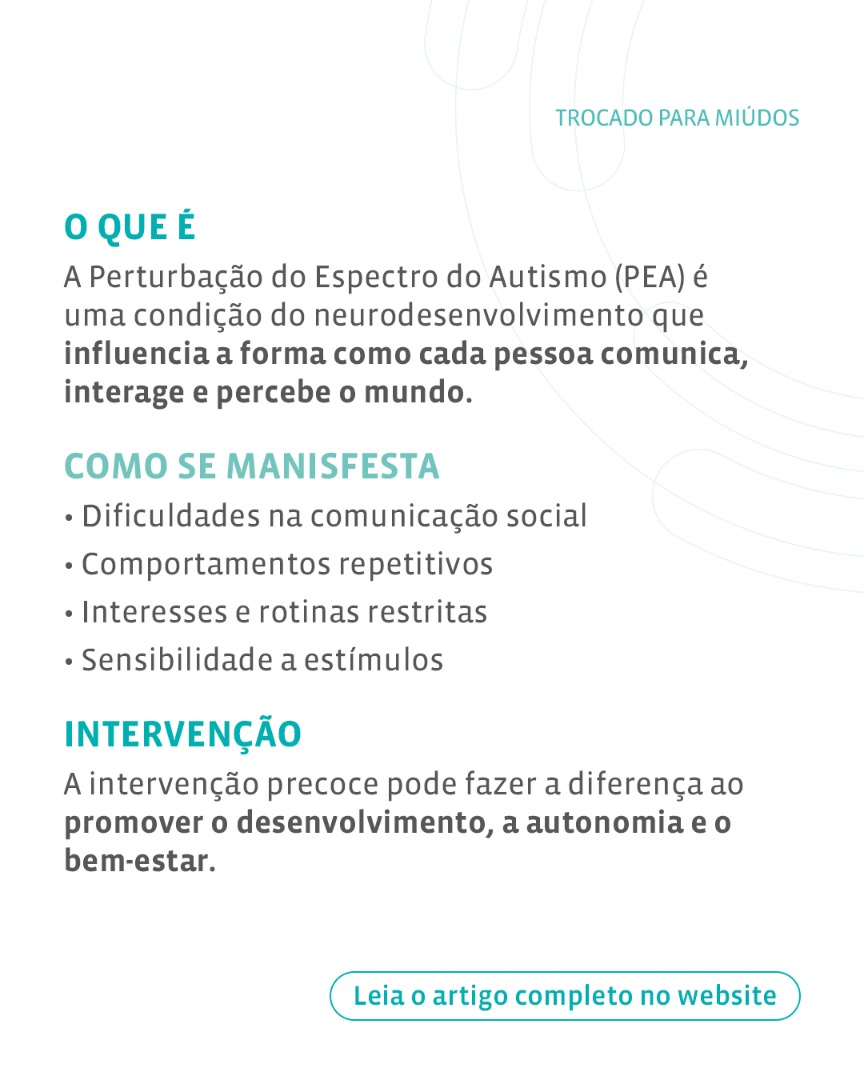





Autism Spectrum Disorder (ASD) is a neurodevelopmental condition that accompanies an individual throughout life, influencing how they communicate, interact socially, and perceive the world. In the context of World Autism Awareness Day, it is essential to promote knowledge and understanding of this reality, contributing to a more informed, inclusive, and empathetic society.
The signs of autism can manifest in very diverse ways, which is why it is described as a “spectrum”. Nevertheless, there are some core symptoms that aid in its identification. These include difficulties in social communication, such as reduced eye contact, delayed or absent verbal language, difficulty initiating or maintaining conversations, and limited understanding of facial expressions or emotions. In addition, repetitive patterns of behaviour and restricted interests are common, such as repetitive movements (hand-flapping or body rocking), adherence to rigid routines, and intense interest in highly specific topics. Some children may also present hypersensitivity or hyposensitivity to sensory stimuli, such as sounds, lights, textures, or smells.
Currently, the classification of ASD includes different levels of severity, defined according to the level of support required in daily life. Broadly, three levels are described: Level 1 (requiring support), Level 2 (requiring substantial support), and Level 3 (requiring very substantial support). This classification does not define a person’s value or potential but helps guide intervention and better understand their specific needs, as the impact of autism can vary significantly from one individual to another.
Children with autism may face several challenges in their daily lives. Interaction with other children can be difficult, potentially leading to social isolation. Adapting to changes in routine may cause significant anxiety, and environments with many stimuli can become overwhelming. At school, difficulties in learning may arise, not necessarily due to a lack of ability, but rather differences in how information is processed and communicated.
For parents and caregivers, the journey can also be demanding. They often face uncertainty at the time of diagnosis, difficulties in accessing specialised support, and the constant need to adapt to the child’s needs. Emotional and physical strain can be considerable, especially when there is no adequate support network.
Despite these challenges, it is important to emphasise that outcomes can improve significantly with early and appropriate intervention. Timely identification of signs allows for the initiation of therapies that promote the development of communication, social skills, and autonomy. Interventions such as speech and language therapy, occupational therapy, and educational support are often essential. A structured, predictable environment adapted to the child’s needs also contributes to their well-being and progress.
Each person with autism is unique, and therefore their needs may vary widely. Some may require intensive support throughout life, while others can achieve high levels of independence. Common needs include adaptation of the school environment, alternative communication strategies, support with emotional regulation, and understanding from the community.
I strongly recommend watching videos developed by the National Autistic Society to gain first-hand insight into what it is like to have autism, for example:
• What if we could change this?:
• Make it Stop:
Awareness is an essential step towards inclusion. With greater knowledge, we reduce stigma and increase our ability to embrace difference. On this World Autism Awareness Day, it is important to remember that understanding is the first step towards inclusion, and that small acts of empathy can make a significant difference in the lives of these children and their families.
Article developed by Dr António Salgado, Paediatrician at HPA Gambelas.
2, April 2026