



Fear of the dentist is one of the most common fears in adults. So common, in fact, that it crosses generations, social contexts, and levels of education.
This "classic" fear remains surprisingly current.
But where does this fear come from, after all?
In most cases, the origin is relatively clear: past negative experiences. Old appointments marked by pain, ineffective anaesthesia, lack of explanation, or a very technical and unempathetic approach. The human brain learns quickly—and when you associate a context with pain or discomfort, you tend to avoid it in the future.
In children and young people, the phenomenon is even more interesting. Often, fear doesn't stem from direct experience but from what they hear at home. Phrases like "that hurts a lot," "you're going to suffer," or "I hate going to the dentist" function as an indirect form of learning. Psychology calls this social learning: we learn fears by observing or listening to others, even without our own experience.
Added to this is another well-documented factor: the fear of the unknown. When we don't know exactly what will happen, the brain tends to anticipate negative scenarios. From a neurobiological point of view, this anticipation activates the same brain circuits as real fear, increasing anxiety, muscle tension, and sensitivity to pain.
In modern dentistry, there is a specialty dedicated to the approach to children: paediatric dentistry, which integrates techniques of communication, behavioural adaptation, and progressive desensitization, all widely supported by scientific evidence.
In adults, however, there is still the implicit idea that "they should endure it." But the fear doesn't disappear with age—it just becomes quieter. Studies show that dental anxiety in adults is frequently associated with early experiences, emotional memories, and a perception of loss of control, more than a simple matter of pain tolerance.
In clinical practice, when we listen attentively to the adult patient with dental phobia, it becomes clear that the root of the problem is often deeper than the pain.
The central fear is frequently this: the fear of losing control.
Scientific evidence consistently demonstrates that the patient's perception of control is one of the main modulators of anxiety and pain. The greater the perceived control, the lower the stress response, the less muscle tension, and the better the overall treatment experience.
In simple terms: when the patient feels involved and makes decisions, fear loses its power.
Overcoming the fear of the dentist doesn't begin in the chair—it begins in the relationship.
It begins with listening, explaining, anticipating, returning control to the patient, and creating predictability. The patient knows what will be done, why, how long it will take, and, most importantly, knows they can stop at any time.
This model aligns with what science calls patient-centred care—today considered the gold standard in modern medicine.
We work with the patient, never on the patient.
The doctor-patient relationship is built on an essential pillar: trust. Trust stems from technical competence, but also from empathy, listening, and respect for each person's pace.
When the patient feels at the centre, understands the process, and maintains control, fear ceases to dictate decisions.
If you've avoided going to the dentist for years due to fear or anxiety, know that you're not alone — and that today there are safe, humane, and effective approaches. The first step is simple: talk. The rest is built together.
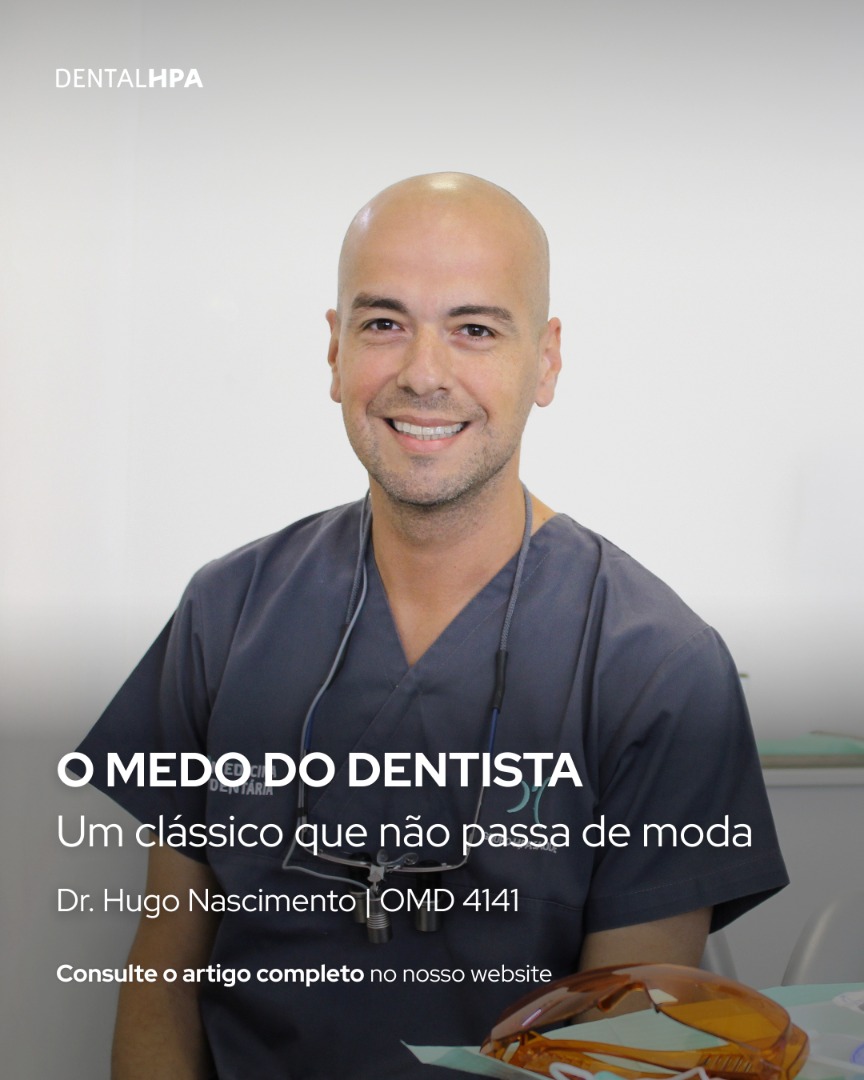
Article by Dr. Hugo Nascimento, a dentist with exclusive dedication to complex and aesthetic oral rehabilitation.
14, May 2026