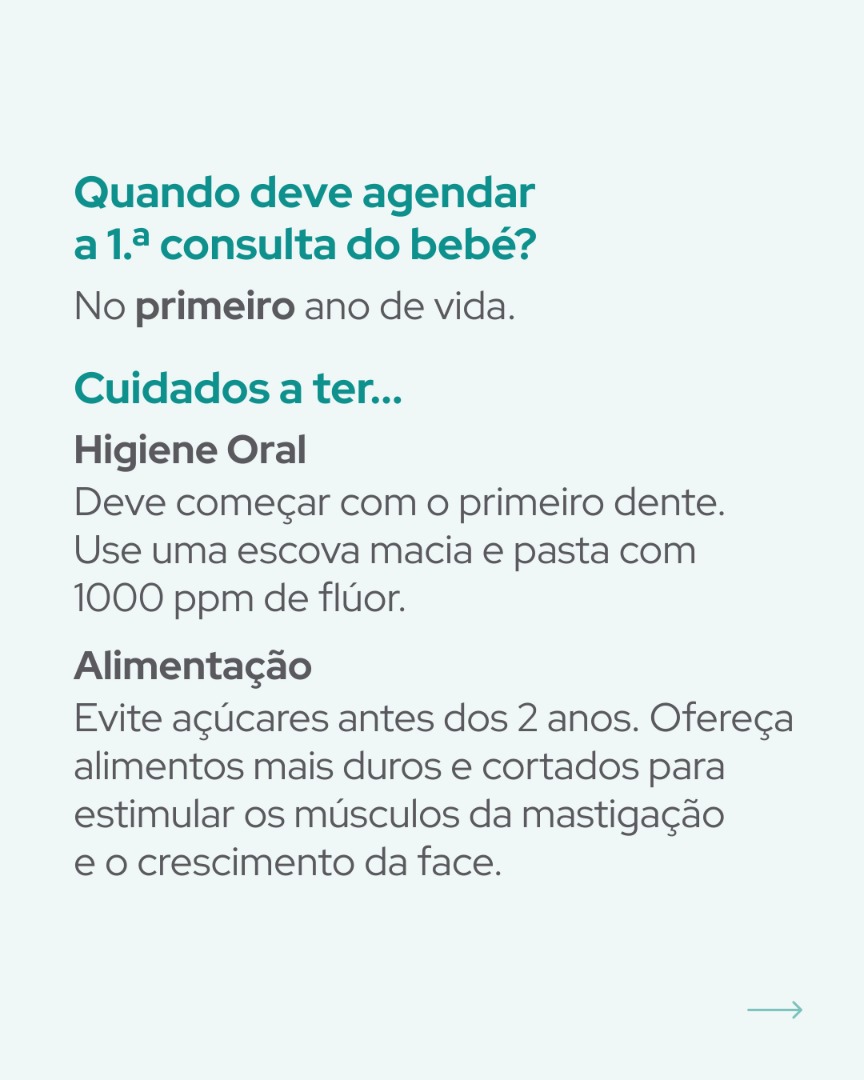





Did you know that a baby's first dental consultation should take place during their first year of life? Many parents still believe that the first visit to the dentist should only happen around the age of 4, but the reality is that it should be done before the child learns to walk or talk. The eruption of the first milk tooth is enough.
This is an extremely important appointment regarding the prevention of future oral problems. The Paediatric Dentist examines the baby's oral cavity, but more importantly, provides parents with valuable advice on oral hygiene, diet, sucking habits, among others.
Oral hygiene should begin as soon as the first tooth erupts. It should be performed by the parents using a soft-bristled brush with a small head and short handle, adapted to the small size of the oral cavity. The toothpaste must contain fluoride, specifically 1000 ppm (parts per million). The amount of toothpaste should be equivalent to the size of a grain of rice, and the brush should not be wetted beforehand. This ensures the toothpaste produces less foam and the child swallows a smaller amount of dentifrice. Brushing should be done 2 to 3 times a day; in the case of brushing before sleep, it must be done after the baby's last feed (whether breast milk or formula).
We know that a baby's daily brushing routine can be challenging. We should try to make the moment lighter with playful activities or catchy songs. Even so, if it proves difficult at times, brushing should never be optional.
The Dentist will ask questions about the baby's diet. The introduction of foods with processed sugars is not recommended before the age of two and, even after this age, they should be offered sporadically rather than as a daily habit. Preferably, choose to offer a sweet treat at home so that brushing can be done shortly afterwards.
During the introduction of solids, it is important to offer the baby harder foods that can be cut but not mashed, to stimulate the masticatory muscles. Learning to chew correctly has a direct impact on the child's teeth and bite, allowing for balanced facial growth and reducing the risk of orthodontic problems in the future.
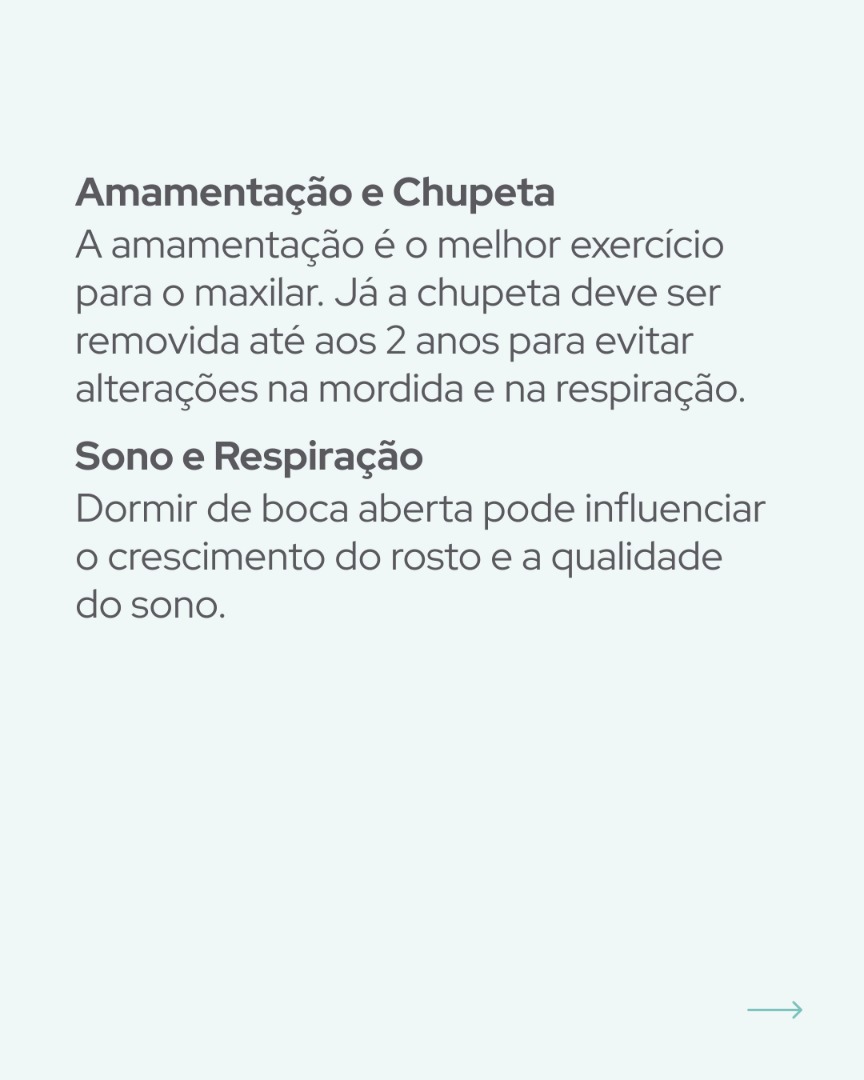
Breastfeeding is the best sucking habit a baby can have, as it stimulates the growth of the upper jaw, strengthens the muscles for swallowing, chewing, and speech, and helps form a wider palate.
And can breast milk cause cavities? Not by itself, but when sugary foods are added to the diet, oral bacteria begin to produce more acid, and the oral environment becomes more conducive to tooth decay. Therefore, frequent feeds, especially during the night, combined with insufficient oral hygiene, can contribute to an increased risk of early childhood caries.
While a dummy (pacifier) can be very useful for soothing a child, its frequent and prolonged use causes alterations in the growth of the oral cavity. Unlike the mother's nipple, the teat of a dummy does not adapt to the baby's palate, which can cause open bites (front teeth do not touch), as well as encourage the habit of keeping the mouth open, keeping the tongue low, and promoting mouth breathing. All of this can affect the baby's craniofacial growth, breathing, speech, and even sleep quality.
However, if the dummy is removed by the age of 2, bite alterations may resolve spontaneously.
The Dentist will also examine your baby's lingual frenulum, as the high position of the tongue is essential for the correct growth of the palate. They may also ask questions about the baby's sleep. If the baby tends to sleep with their mouth open, there may be some nasal airway obstruction, so the Paediatric Dentist may suggest a visit to an ENT specialist (Otorhinolaryngologist). This is because, as mentioned, mouth breathing keeps the tongue low, which affects craniofacial growth.
Prevention is the key to the healthy development of your baby's teeth and oral cavity. Do not delay the first consultation any longer!
23, April 2026