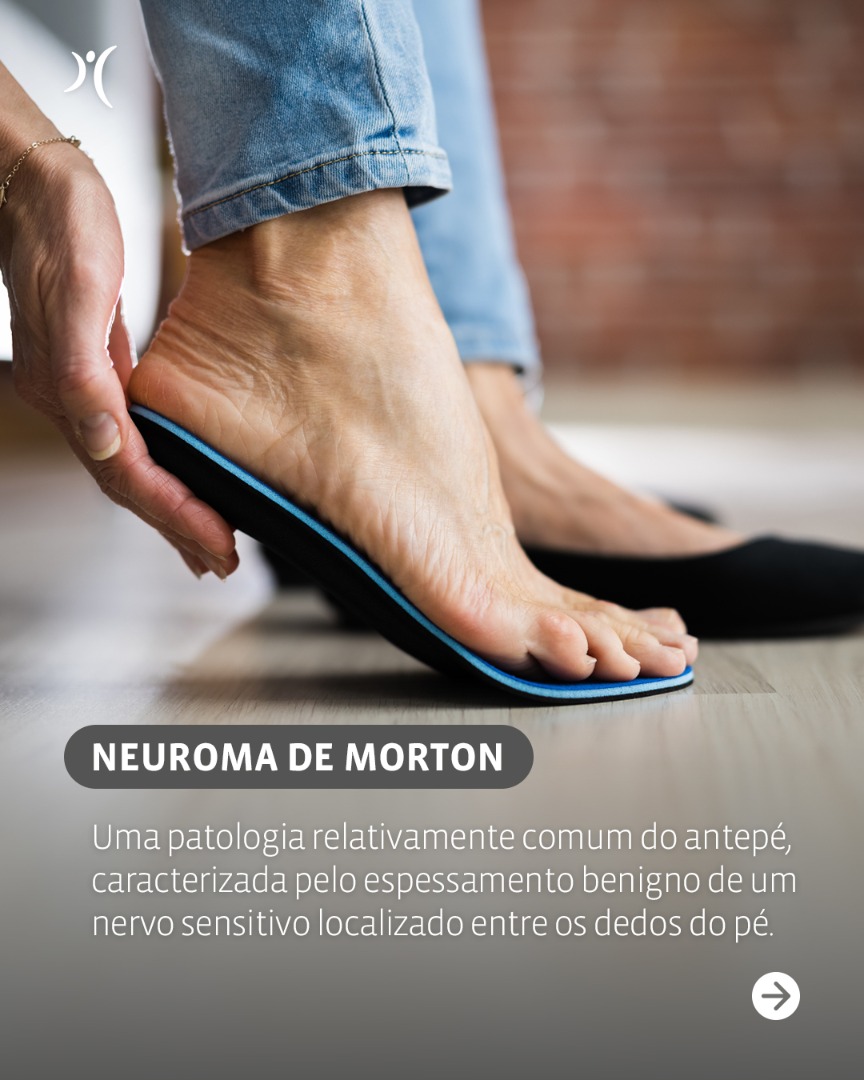





Morton’s neuroma is a relatively common condition affecting the forefoot, characterised by the benign thickening of a sensory nerve located between the toes. Although it does not pose a health risk, it can cause significant pain and markedly interfere with mobility and quality of life.
What is Morton’s neuroma?
Morton’s neuroma refers to a pathological change of the interdigital nerve, most commonly located between the third and fourth toes. This change results from repeated compression and irritation of the nerve, leading to its progressive thickening. Although it is often referred to as a “neuroma”, it is not a malignant tumour, but rather an inflammatory and fibrotic response of the nerve.
This condition mainly affects women, particularly from the third decade of life onwards, and may occur in one or both feet. Its higher prevalence in females is frequently associated with the type of footwear worn.
Most common symptoms
The main manifestation of Morton’s neuroma is pain in the sole of the foot, located in the anterior region near the base of the toes. Patients often describe this pain as a burning sensation, an electric shock, or as if they were stepping on a hard or sharp object.
Pain tends to appear or worsen during walking, running or sports activities, especially when wearing tight, narrow or high-heeled shoes. Relief usually occurs when shoes are removed and the feet are rested, particularly on cold surfaces. In some cases, tingling, numbness or partial loss of sensation in the affected toes may also occur.
Main causes and risk factors
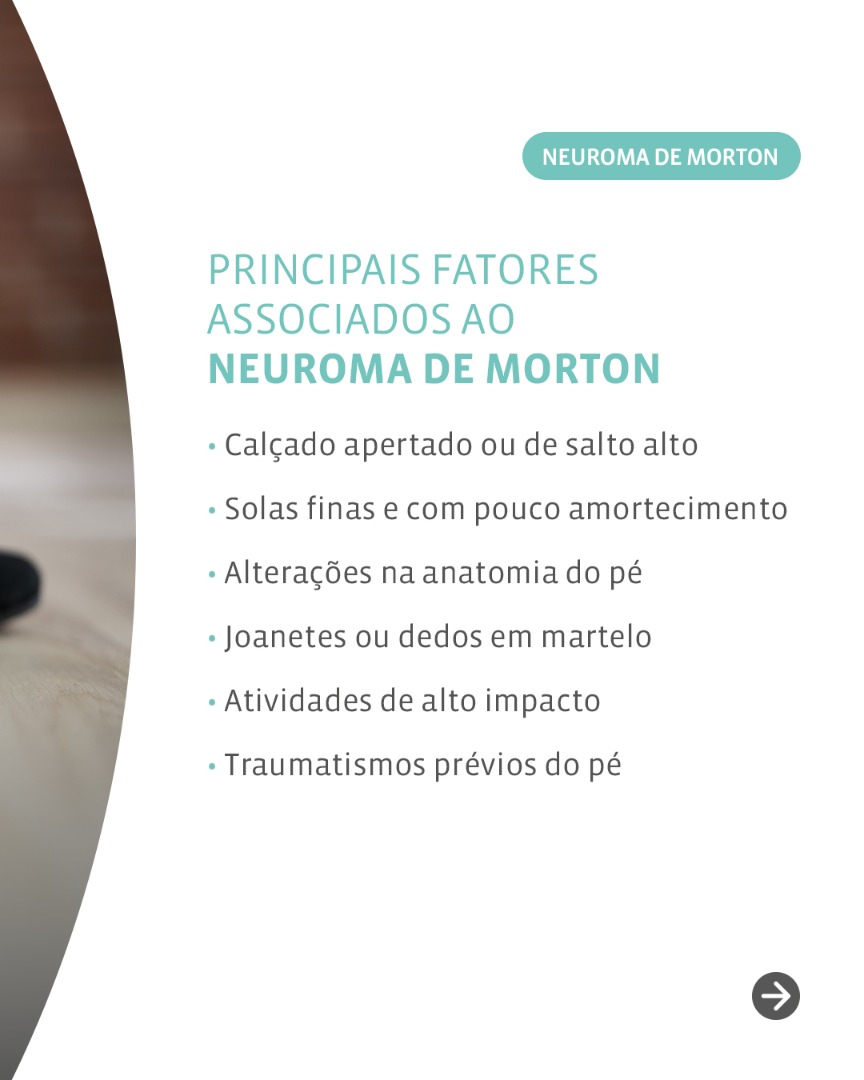
The exact cause of Morton’s neuroma is not fully understood, but it is known to result from a combination of factors that lead to repeated mechanical stress on the interdigital nerve. The main associated factors include:
- Frequent use of tight, narrow or high-heeled footwear;
- Shoes with thin soles and poor shock-absorbing capacity;
- Foot anatomical abnormalities, such as flat feet or excessively high arches;
- Toe deformities, such as bunions or hammer toes;
- Regular participation in high-impact activities, such as running, football, tennis or basketball;
- Previous trauma or injuries to the foot.
The combination of these factors increases the pressure exerted on the digital nerves, favouring the development of the condition.
How is the diagnosis made?
The diagnosis of Morton’s neuroma is based on a detailed clinical assessment performed by an orthopaedic specialist, taking into account the reported symptoms and physical examination of the foot. It is essential to exclude other conditions with similar presentations, such as bursitis, osteoarthritis, stress fractures or metatarsalgia.
As a diagnostic adjunct, imaging studies may be requested, namely foot X-rays and ultrasound. In more complex situations, or when uncertainty persists, magnetic resonance imaging (MRI) allows confirmation of the diagnosis and more detailed assessment of the involved structures.
Treatment options
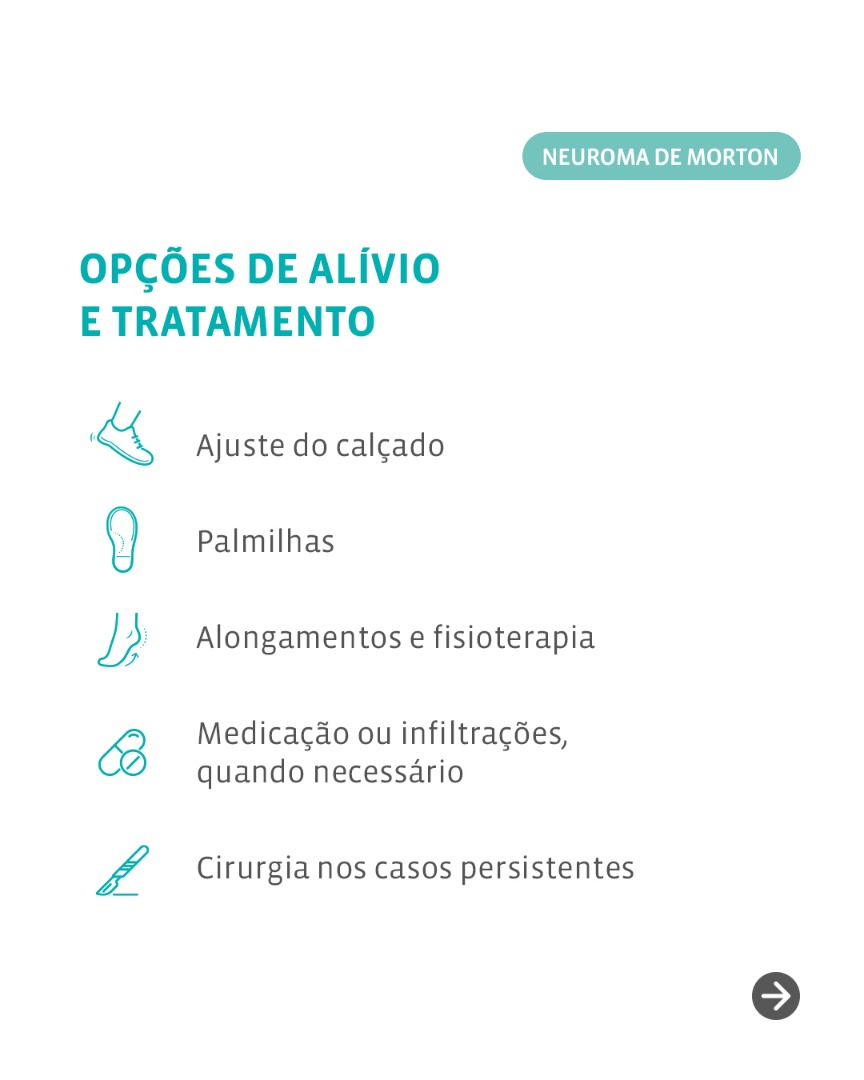
The main goal of treating Morton’s neuroma is to reduce compression and irritation of the affected nerve. In most cases, treatment begins with conservative measures, which include:
- Changing footwear, favouring wider, more comfortable shoes with low heels;
- Use of insoles or specific orthoses designed to redistribute load across the forefoot and relieve pressure on the nerve;
- Stretching exercises and, in some cases, physiotherapy.
When necessary, analgesic and anti-inflammatory medication may be prescribed, or local corticosteroid injections may be performed for temporary symptom relief.
In cases where conservative treatment is ineffective and pain remains limiting, surgery may be indicated. The surgical procedure involves releasing the nerve from the fibrous structures compressing it and, often, removing it. This is a short procedure, usually performed on a day-case basis, with a high success rate. As a possible consequence, partial loss of sensation in the affected toes may occur.
Prevention and care
Some simple measures may help prevent the development of Morton’s neuroma or avoid worsening of symptoms:
- Avoid prolonged use of tight or high-heeled shoes;
- Choose comfortable footwear with adequate space for the toes;
- Use sports shoes with cushioned insoles during physical activity;
- Maintain a healthy body weight to reduce overload on the forefoot.
Early diagnosis and appropriate medical follow-up are essential for effective treatment and preservation of quality of life.
10, February 2026