





Appointments
Request Appointment/Request Exam - After completing the respective forms, these requests will be processed by our services, and you will receive confirmation by email. The indications about the Agreements (Insurance/Subsystem) are merely informative, please request confirmation in the "Observations" field.
Schedule Appointment/Exam myHPA - By accessing myHPA Saúde you can make the appointment in real time, directly on the Doctor's schedule according to his availability.
You can also contact us at +351 282 420 400 Algarve | +351 269 630 370 Alentejo | +351 291 003 300 Madeira
Phone booking/service hours:
Monday to Friday: 8:00 AM to 7:00 PM, Saturday: 8:00 AM to 5:00 PM Sunday and Holidays: Closed
(National landline)
Your request has been successfully received. We will confirm your appointment shortly.
Download myHPA Saúde:


HPA Health Group Newsletter:
Subscribe and stay up to date with all the news!
Diabetes Nursing Consultation
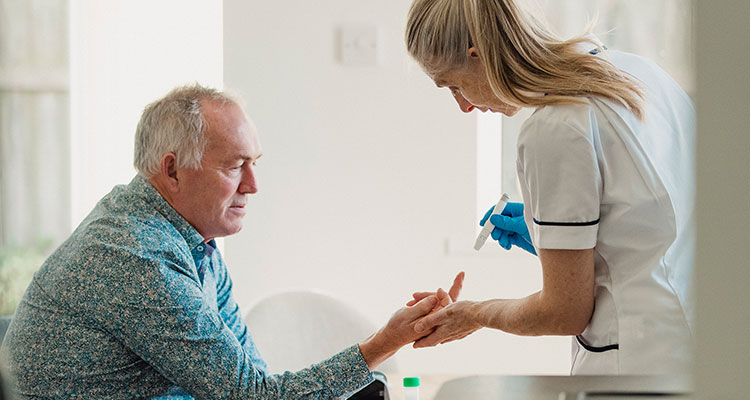
The diabetes nursing consultation is a cornerstone of the multidisciplinary care approach for people with diabetes mellitus, playing a crucial role in metabolic control, complication prevention, and the promotion of patient autonomy. At the HPA, this specialised service is offered to individuals with gestational diabetes, type 1 diabetes, and type 2 diabetes, dynamically adapting to the specific needs identified during clinical follow-up.
SERVICE AVAILABLE
AT OUR LOCATIONS*
Algarve
Hospital Particular do Algarve - Alvor
Hospital Particular do Algarve - Gambelas
Centro Médico Internacional - VRSA
Centro de Ortopedia e Reabilitação - Faro
Clínica Particular do Algarve - Guia
Clínica Particular de Lagos
Clínica Particular Medchique - Monchique
Clínica Particular de Vilamoura
Clínica Particular SIIPEMOR
Clínica São Gonçalo de Lagos
Alentejo
Hospital Particular do Alentejo - Sines
Clínica Particular de Beja
Clínica Particular de Odemira
Clínica Particular de Vila Nova de Milfontes
Madeira
Hospital Particular da Madeira - Funchal
Madeira Medical Center - Funchal
* Subject to change. Please confirm availability in advance by calling +351 282 420 400.
Scientific Evidence of the Effectiveness of Nursing Consultations
International scientific literature consistently shows that interventions led by specialist diabetes nurses produce significant clinical outcomes.
Randomised controlled trials demonstrate reductions in glycated haemoglobin (HbA1c) ranging from 0.32% to 0.92%, improvements in cardiovascular parameters, decreases in body weight and body mass index, as well as substantial increases in self-efficacy and self-care behaviours.
Structured educational interventions conducted by nurses are associated with approximately a 50% reduction in the incidence of severe hypoglycaemia, comparable to results obtained with technological interventions. Furthermore, telephone follow-up by nurses has been shown to improve glycaemic control, with HbA1c reductions of 1.1% over 12 weeks, as well as enhancements in adherence to pharmacological treatment, diet, and exercise regimens.
Organisational Structure and Frequency
The diabetes nursing consultation at the HPA Health Group operates in coordination with specialist physicians and is conducted prior to the medical consultation. The follow-up frequency is individualised, with two annual consultations recommended for patients with well-controlled disease, and the possibility of intensified monitoring whenever clinically indicated.
Systematic Clinical Assessment
Anthropometric and Metabolic Parameters
The consultation begins with the safe identification of the patient and a therapeutic welcome, followed by the systematic collection of clinical data. The assessment includes:
- Capillary blood glucose;
- Body weight and calculation of body mass index (BMI);
- Blood pressure and heart rate;
- Abdominal circumference.
Diabetic Foot Assessment
Assessment of the diabetic foot is a core component of the nursing consultation, carried out according to the risk stratification system of the International Working Group on the Diabetic Foot (IWGDF) 2019, translated and adapted by the Diabetic Foot Study Group (GEPED) of the Portuguese Diabetes Society (SPD). This approach includes:
- Protective sensation assessment: testing for loss of protective sensation (LOPS) using a 10g monofilament;
- Vascular assessment: palpation of pedal pulses;
- Skin inspection: identification of changes in colour, temperature, presence of calluses, oedema, or pre-ulcerative signs;
- Musculoskeletal assessment: detection of deformities (claw or hammer toes), bony prominences, and limitation of joint mobility;
- Footwear evaluation: suitability, fit, and condition;
- Foot hygiene assessment: evaluation of nail-cutting technique, foot hygiene, and superficial fungal infections.
The risk stratification determines the subsequent monitoring frequency:
- Category 0 (very low risk) – annually;
- Category 1 (low risk) – every 6–12 months;
- Category 2 (moderate risk) – every 3–6 months;
- Category 3 (high risk) – every 1–3 months.
Based on this assessment, personalised education is provided regarding foot care and monitoring, tailored to the patient’s risk level and sociocultural context.
Therapeutic Education and Empowerment for Self-Management: Glucose Monitoring Systems
Conventional Capillary Blood Glucose
When indicated, the nursing team provides glucometers and structured training on capillary blood glucose testing, including:
- Correct handling of the device;
- Finger-prick technique;
- Interpretation of results;
- Frequency and timing tailored to individual needs.
Continuous Glucose Monitoring Systems (CGM)
- For patients prescribed continuous glucose monitoring sensors, the nursing consultation provides comprehensive training, including:
- Installation of the mobile application or configuration of the dedicated reader;
- Sensor insertion and training for future replacements;
- Programming and personalisation of hypo- and hyperglycaemia alarms;
- Interpretation of glucose trends and patterns;
- Troubleshooting technical issues;
- Configuration of LibreLink Up® for remote monitoring by family members or caregivers;
- Integration with HPA medical consultations when technologically feasible.
Insulin Therapy
Structured training on insulin administration is provided, covering:
- Storage: correct preservation before and after first use;
- Preparation: handling the pen, attaching and removing needles;
- Administration technique: insertion angle, depth, and needle dwell time;
- Injection sites: identification of appropriate anatomical areas (abdomen, thigh, arm, buttocks);
- Systematic rotation: rotation scheme to prevent lipodystrophy;
- Supervised practice: handling demonstration pens and simulating administration.
GLP-1 Receptor Agonists
For patients prescribed injectable antidiabetics (e.g., Mounjaro®, Trulicity®, Ozempic®), specific training is provided on:
- Storage and preservation;
- Administration technique;
- Anatomical injection sites;
- Administration frequency;
- Handling of pre-filled devices;
- Management of common side effects.
Smart Insulin Pens
When patients have or acquire smart pens, training includes:
- Installation and configuration of the mobile application;
- Bluetooth synchronization;
- Instruction on interpreting dosing data;
- Integration with continuous glucose monitoring systems.
Hypoglycaemia Education
Prevention and management of hypoglycaemia is a key component of therapeutic education. Training covers:
- Recognition: signs and symptoms of hypoglycaemia;
- Prevention: identification of risk factors, medication adjustment, pre-exercise nutrition;
- Treatment: the “Rule of 15” (15g of fast-acting carbohydrates, reassessment after 15 minutes);
- Special situations: nocturnal hypoglycaemia, hypoglycaemia unawareness.
Lifestyle Interventions
Nutrition
Nutrition is fundamental for diabetes management. The nursing team addresses principles of appropriate diet tailored to cultural habits and individual beliefs and facilitates referral to specialist nutrition consultations.
Physical Activity
Regular physical activity is systematically encouraged, with guidance adapted to the patient’s functional capacity and comorbidities.
Smoking Cessation and Healthy Lifestyles
Health behaviours that reduce cardiovascular, renal, ophthalmologic, and neurological risk are promoted, particularly relevant for people with diabetes.
Continuity of Care and Telephone Follow-Up
The nursing team ensures continuous availability to answer questions from patients, family members, and caregivers. Structured telephone follow-up is provided in the following situations:
• After placement of continuous glucose monitoring sensors;
• At initiation of insulin therapy or injectable antidiabetics;
• Whenever additional education is required;
• To verify therapeutic adherence and identify difficulties.
Telephone follow-up has proven effective in improving metabolic control, increasing therapeutic adherence, and enhancing patient satisfaction, representing a cost-effective strategy for ongoing care.
Intra-Hospital Coordination
At the request of the medical or inpatient nursing team, diabetes specialist nurses may attend hospital wards to:• Realização de ensinos a pacientes internados;
• Provide education to admitted patients;
• Prepare patients for safe discharge;
• Ensure continuity of therapy.
Therapeutic Objectives and Health Benefits
The diabetes nursing consultation aims to:
- Empowerment: enable patients to manage their condition independently;
- Skill development: provide practical tools for self-management;
- Complication prevention: reduce micro- and macrovascular complications;
- Reduction of comorbidities: control cardiovascular risk factors;
- Mortality reduction: optimise metabolic control;
- Family involvement: include family/caregivers in the therapeutic process;
- Awareness: increase knowledge about the condition and its implications.
The HPA Health Group’s diabetes nursing consultation is a structured, evidence-based intervention that complements medical care and enhances clinical outcomes through therapeutic education, self-management training, and longitudinal follow-up.
The integration of advanced technologies (continuous glucose monitoring sensors and smart pens), application of international foot risk assessment protocols, and structured telephone follow-up position this service as a reference in specialised diabetes care, significantly contributing to the reduction of complications, hospital admissions, and mortality associated with this chronic condition.
Request for Information
Enfermagem
You can consult your rights here.
You may revoke your consent at any time by sending an email to: dpo@grupohpa.com
You can read more about our Privacy Policy via this link.