






Appointments
Request Appointment/Request Exam - After completing the respective forms, these requests will be processed by our services, and you will receive confirmation by email. The indications about the Agreements (Insurance/Subsystem) are merely informative, please request confirmation in the "Observations" field.
Schedule Appointment/Exam myHPA - By accessing myHPA Saúde you can make the appointment in real time, directly on the Doctor's schedule according to his availability.
You can also contact us at +351 282 420 400 Algarve | +351 269 630 370 Alentejo | +351 291 003 300 Madeira
Phone booking/service hours:
Monday to Friday: 8:00 AM to 7:00 PM, Saturday: 8:00 AM to 5:00 PM Sunday and Holidays: Closed
(National landline)
Your request has been successfully received. We will confirm your appointment shortly.
Download myHPA Saúde:


HPA Health Group Newsletter:
Subscribe and stay up to date with all the news!
Anal Fistula
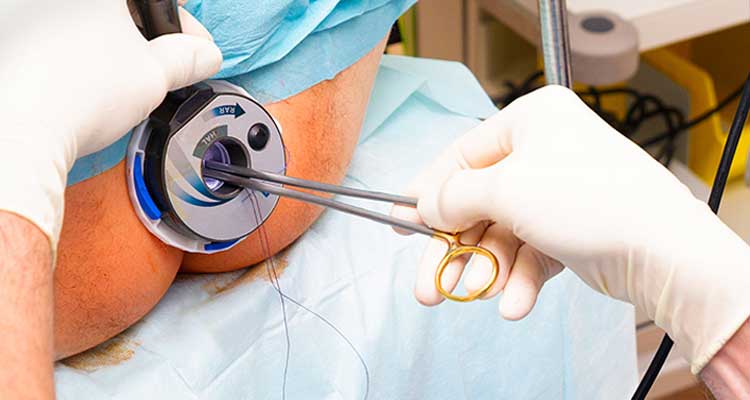
An anal fistula is an abnormal tract that forms between the anal canal and the skin surface, usually in the perianal region. It may be simple, with a single tract, or complex, with multiple secondary tracts. Anal fistulas do not heal spontaneously and usually require medical or surgical intervention. They are more common in adult men around the age of 40, while in children they are more often congenital.
In most cases, anal fistulas arise from obstruction of the anal glands, leading to inflammation and fistula formation. Other possible causes include perirectal or anal trauma, fissures, Crohn’s disease, diverticulitis, malignancy or infections such as tuberculosis.
Common symptoms include recurrent abscesses, discharge of pus or blood, anal itching, swelling and local pain. In severe infections, systemic symptoms may occur. Diagnosis is based on clinical history, physical examination and, when necessary, complementary investigations such as fistula probing, anoscopy, fistulography, endoanal ultrasound or magnetic resonance imaging (MRI). Colonoscopy or sigmoidoscopy may be performed to exclude underlying conditions.
Treatment is always surgical, as fistulas do not heal spontaneously. The approach depends on the location, complexity and relationship with the anal sphincter. Techniques include:
- Laser techniques (laser energy applied along the fistula tract);
- Fistulectomy: complete excision of the fistula with closure of the area;
- Fistulotomy: opening of the tract to allow gradual healing;
- Seton placement: surgical thread used for drainage and controlled healing;
- Closure of the internal opening with biodegradable material.
The goal of treatment is to eliminate the fistula while preserving anal sphincter function, ensuring continence for stool and gas. With appropriate follow-up by gastroenterologists or general surgeons, the prognosis is favourable and most patients recover without significant complications.
- Dra. Ana Margarida Vieira
- Dr. André Sancho Ramos
- Dr. Bruno Peixe
- Dra. Helena Tavares de Sousa
- Dra. Maria Margarida Sampaio
- Dra. Patrícia Queirós
- Dra. Ana Rita Herculano
- Dr. André Sancho Ramos
- Dr. Diamantino Sousa
- Dr. Francisco Açucena
- Dr. Horácio Guerreiro
- Dr. Mário César
- Dr. Horácio Guerreiro
- Dra. Ana Rita Herculano
- Dra. Carla Sousa Andrade
- Dra. Isabel Jardim
- Dra. Joana Carvão
- Dr. Luís Jasmins
- Dr. Nuno Ladeira
- Dra. Rosa Neto da Silva
- Dr. Vítor Magno Pereira