






Appointments
Request Appointment/Request Exam - After completing the respective forms, these requests will be processed by our services, and you will receive confirmation by email. The indications about the Agreements (Insurance/Subsystem) are merely informative, please request confirmation in the "Observations" field.
Schedule Appointment/Exam myHPA - By accessing myHPA Saúde you can make the appointment in real time, directly on the Doctor's schedule according to his availability.
You can also contact us at +351 282 420 400 Algarve | +351 269 630 370 Alentejo | +351 291 003 300 Madeira
Phone booking/service hours:
Monday to Friday: 8:00 AM to 7:00 PM, Saturday: 8:00 AM to 5:00 PM Sunday and Holidays: Closed
(National landline)
Your request has been successfully received. We will confirm your appointment shortly.
Download myHPA Saúde:


HPA Health Group Newsletter:
Subscribe and stay up to date with all the news!
Inflammatory Bowel Disease
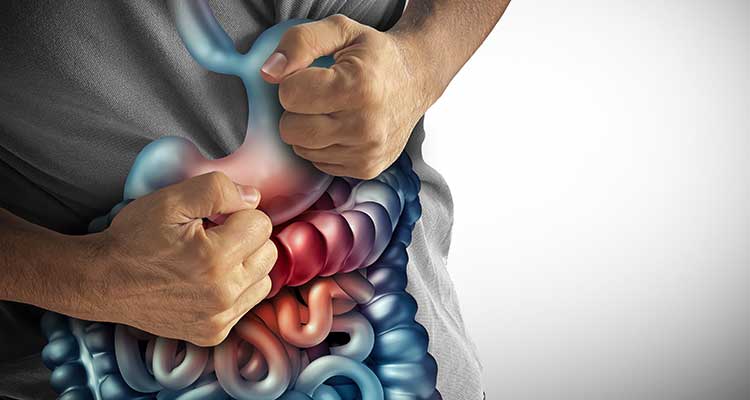
Inflammatory Bowel Disease (IBD) is a chronic condition of the digestive system characterised by persistent intestinal inflammation, which may cause redness, swelling and ulcer formation. It mainly includes two conditions: ulcerative colitis and Crohn’s disease. When a clear distinction between the two cannot be made, it is referred to as indeterminate colitis.
In addition to intestinal symptoms, manifestations may occur in other parts of the body, such as joint pain and swelling, skin lesions, mouth ulcers and eye inflammation.
The causes of IBD are not fully understood, but are believed to result from the interaction between genetic and environmental factors and an abnormal immune response. Smoking is an important risk factor and is particularly associated with disease progression.
Main symptoms include:
- Persistent diarrhoea, with or without blood;
- Abdominal pain and cramping;
- Weight loss and reduced appetite;
- Fatigue, weakness and anaemia;
- Fever and extra-intestinal manifestations.
Diagnosis is based on clinical evaluation, laboratory tests, endoscopic and imaging studies, which allow determination of the extent and severity of inflammation. Regular surveillance is essential to monitor disease progression and prevent complications, such as colorectal cancer.
Treatment aims to control inflammation, relieve symptoms and reduce relapses. It may include anti-inflammatory drugs, corticosteroids, immunomodulators and biological therapies. In more severe cases or when there is no response to medication, surgery may be required.
Although there is no way to prevent the disease, adopting healthy lifestyle habits, maintaining a balanced diet, stopping smoking and ensuring regular medical follow-up are essential to improve quality of life and reduce the risk of complications.
- Dra. Ana Margarida Vieira
- Dr. André Sancho Ramos
- Dr. Bruno Peixe
- Dra. Helena Tavares de Sousa
- Dra. Maria Margarida Sampaio
- Dra. Patrícia Queirós
- Dra. Ana Rita Herculano
- Dr. André Sancho Ramos
- Dr. Diamantino Sousa
- Dr. Francisco Açucena
- Dr. Horácio Guerreiro
- Dr. Mário César
- Dr. Horácio Guerreiro
- Dra. Ana Rita Herculano
- Dra. Carla Sousa Andrade
- Dra. Isabel Jardim
- Dra. Joana Carvão
- Dr. Luís Jasmins
- Dr. Nuno Ladeira
- Dra. Rosa Neto da Silva
- Dr. Vítor Magno Pereira