






Appointments
Request Appointment/Request Exam - After completing the respective forms, these requests will be processed by our services, and you will receive confirmation by email. The indications about the Agreements (Insurance/Subsystem) are merely informative, please request confirmation in the "Observations" field.
Schedule Appointment/Exam myHPA - By accessing myHPA Saúde you can make the appointment in real time, directly on the Doctor's schedule according to his availability.
You can also contact us at +351 282 420 400 Algarve | +351 269 630 370 Alentejo | +351 291 003 300 Madeira
Phone booking/service hours:
Monday to Friday: 8:00 AM to 7:00 PM, Saturday: 8:00 AM to 5:00 PM Sunday and Holidays: Closed
(National landline)
Your request has been successfully received. We will confirm your appointment shortly.
Download myHPA Saúde:


HPA Health Group Newsletter:
Subscribe and stay up to date with all the news!
Pancreatitis
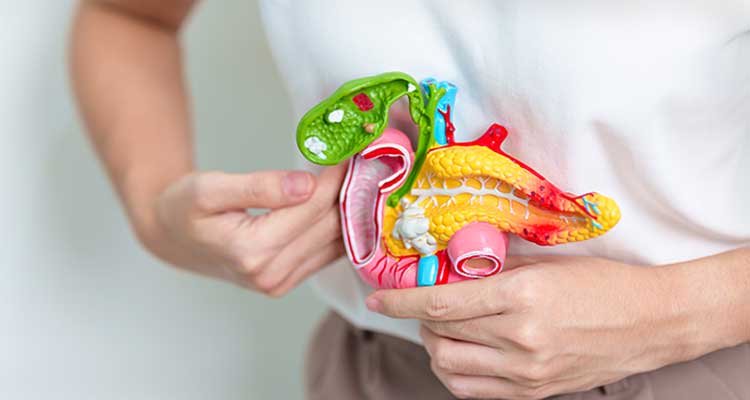
Pancreatitis is inflammation of the pancreas, an organ that produces digestive enzymes (exocrine pancreas) and hormones such as insulin (endocrine pancreas), which are essential for glucose metabolism. It may occur in an acute or chronic form, with different symptoms and clinical courses.
Acute pancreatitis
- Sudden, severe pain in the upper abdomen, often radiating to the back;
- Frequent nausea and vomiting;
- Most common causes: gallstones, alcohol abuse, medications, metabolic disorders (calcium, triglycerides), hereditary and congenital conditions (e.g. pancreas divisum), pancreatic tumours, post-ERCP pancreatitis.
Chronic pancreatitis
- Prolonged inflammation leading to gradual destruction of the pancreas;
- May result in exocrine pancreatic insufficiency (impaired digestion) and endocrine insufficiency (diabetes);
- Causes include alcohol, obstructions (trauma, stones, tumours), hereditary factors and autoimmune pancreatitis.
Symptoms vary according to the type:
- Acute: sudden, constant pain, nausea and vomiting;
- Chronic: persistent pain with episodic exacerbations.
Diagnosis and treatment
Diagnosis of pancreatitis is based on clinical history, physical examination, and laboratory and imaging tests. Laboratory tests include amylase and lipase, while imaging studies commonly used are abdominal ultrasound, CT scan, MRI, ERCP (an endoscopic procedure that allows treatment and removal of bile duct stones) and endoscopic ultrasound (which provides high-resolution imaging of the pancreas).
Treatment depends on the severity and type of pancreatitis. In mild acute pancreatitis, fasting, pain control and intravenous fluid therapy are usually sufficient. In moderate to severe cases, intensive monitoring is required, with enteral or parenteral nutrition and, in some cases, antibiotics or endoscopic or surgical treatment to remove necrotic pancreatic tissue (necrosectomy). In biliary pancreatitis, cholecystectomy is recommended to prevent recurrence, while ERCP may be an alternative in high-risk patients with stones and signs of biliary infection.
In chronic pancreatitis, the focus is on pain control, optimisation of pancreatic function, dietary adjustment and avoidance of alcohol and tobacco. Pancreatic enzyme supplementation is often necessary, and endoscopic or surgical procedures may be indicated in cases of complications or failure of conservative treatment. A low-fat, balanced diet helps reduce symptoms and maintain nutritional health.
- Dra. Ana Margarida Vieira
- Dr. André Sancho Ramos
- Dr. Bruno Peixe
- Dra. Helena Tavares de Sousa
- Dra. Maria Margarida Sampaio
- Dra. Patrícia Queirós
- Dra. Ana Rita Herculano
- Dr. André Sancho Ramos
- Dr. Diamantino Sousa
- Dr. Francisco Açucena
- Dr. Horácio Guerreiro
- Dr. Mário César
- Dr. Horácio Guerreiro
- Dra. Ana Rita Herculano
- Dra. Carla Sousa Andrade
- Dra. Isabel Jardim
- Dra. Joana Carvão
- Dr. Luís Jasmins
- Dr. Nuno Ladeira
- Dra. Rosa Neto da Silva
- Dr. Vítor Magno Pereira