






Appointments
Request Appointment/Request Exam - After completing the respective forms, these requests will be processed by our services, and you will receive confirmation by email. The indications about the Agreements (Insurance/Subsystem) are merely informative, please request confirmation in the "Observations" field.
Schedule Appointment/Exam myHPA - By accessing myHPA Saúde you can make the appointment in real time, directly on the Doctor's schedule according to his availability.
You can also contact us at +351 282 420 400 Algarve | +351 269 630 370 Alentejo | +351 291 003 300 Madeira
Phone booking/service hours:
Monday to Friday: 8:00 AM to 7:00 PM, Saturday: 8:00 AM to 5:00 PM Sunday and Holidays: Closed
(National landline)
Your request has been successfully received. We will confirm your appointment shortly.
Download myHPA Saúde:


HPA Health Group Newsletter:
Subscribe and stay up to date with all the news!
Coeliac Disease
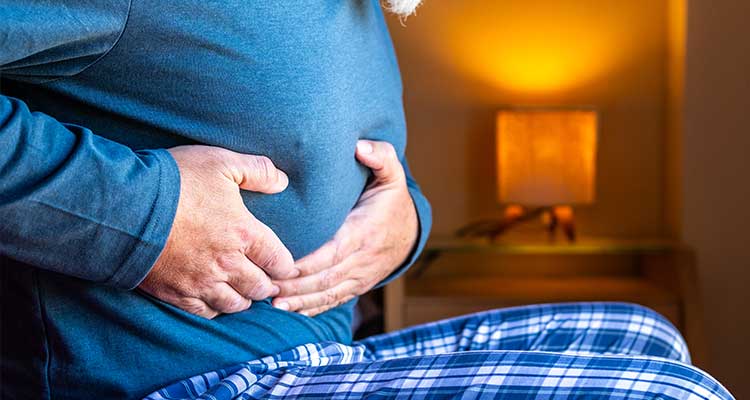
Coeliac disease is an autoimmune condition triggered by the consumption of gluten; a protein found in foods such as bread, biscuits, pasta and certain cereals. When genetically predisposed individuals ingest gluten, the immune system reacts, causing inflammation and atrophy of the villi in the small intestine. This damages the intestine’s ability to absorb nutrients, vitamins, minerals and water. Malabsorption may lead to reduced bone density, infertility, fatigue, neurological disorders and even certain types of cancer.
Symptoms vary between children and adults and may include:
- Persistent diarrhoea;
- Weight loss;
- Growth and developmental difficulties in children;
- Constant fatigue and tiredness;
- Occasionally, anaemia or nutritional deficiencies.
The main cause is an abnormal immune response to gluten. Genetic predisposition makes certain individuals more susceptible, particularly those with a family history of coeliac disease or other autoimmune conditions such as type 1 diabetes, thyroid disease, liver disease, or genetic syndromes such as Down, Turner and Williams syndromes.
Diagnosis can be challenging, as symptoms often develop gradually. Only around 1 in 5 affected individuals are aware that they have the disease.
Currently, there is no medication that cures coeliac disease. The only effective treatment is strict, lifelong adherence to a gluten-free diet, preferably with nutritional support to ensure a balanced dietary plan. It is important to avoid:
- Wheat, barley, rye and Graham flour;
- Malt and semolina;
- Certain processed foods, such as canned soups, sauces, ice cream, instant coffee, processed meats, mustard, ketchup, yoghurts, pasta and confectionery;
- Hidden ingredients found in vitamins, supplements, toothpaste, mouthwashes and cosmetics (such as lipsticks).
After initiating a gluten-free diet, the intestine may recover its absorptive capacity, although multivitamins or supplements may be required during the first months.
In cases refractory to a strictly gluten-free diet, alternative therapeutic options with immunosuppressive drugs (such as corticosteroids or azathioprine) may be considered.
At present, there is no proven way to prevent coeliac disease, as it is an autoimmune disorder linked to genetic predisposition. Early diagnosis and strict adherence to a gluten-free diet are essential to prevent complications and improve the quality of life.
The most serious complication is progression to intestinal lymphoma. For this reason, regular follow-up and clinical surveillance are essential. Several diagnostic methods are currently available for early detection, including laboratory tests, high-resolution endoscopic examinations, capsule endoscopy, computed tomography (CT), magnetic resonance imaging (MRI) and PET-CT.
- Dra. Ana Margarida Vieira
- Dr. André Sancho Ramos
- Dr. Bruno Peixe
- Dra. Helena Tavares de Sousa
- Dra. Maria Margarida Sampaio
- Dra. Patrícia Queirós
- Dra. Ana Rita Herculano
- Dr. André Sancho Ramos
- Dr. Diamantino Sousa
- Dr. Francisco Açucena
- Dr. Horácio Guerreiro
- Dr. Mário César
- Dr. Horácio Guerreiro
- Dra. Ana Rita Herculano
- Dra. Carla Sousa Andrade
- Dra. Isabel Jardim
- Dra. Joana Carvão
- Dr. Luís Jasmins
- Dr. Nuno Ladeira
- Dra. Rosa Neto da Silva
- Dr. Vítor Magno Pereira