






Appointments
Request Appointment/Request Exam - After completing the respective forms, these requests will be processed by our services, and you will receive confirmation by email. The indications about the Agreements (Insurance/Subsystem) are merely informative, please request confirmation in the "Observations" field.
Schedule Appointment/Exam myHPA - By accessing myHPA Saúde you can make the appointment in real time, directly on the Doctor's schedule according to his availability.
You can also contact us at +351 282 420 400 Algarve | +351 269 630 370 Alentejo | +351 291 003 300 Madeira
Phone booking/service hours:
Monday to Friday: 8:00 AM to 7:00 PM, Saturday: 8:00 AM to 5:00 PM Sunday and Holidays: Closed
(National landline)
Your request has been successfully received. We will confirm your appointment shortly.
Download myHPA Saúde:


HPA Health Group Newsletter:
Subscribe and stay up to date with all the news!
Fatty Liver Disease (Hepatic Steatosis)
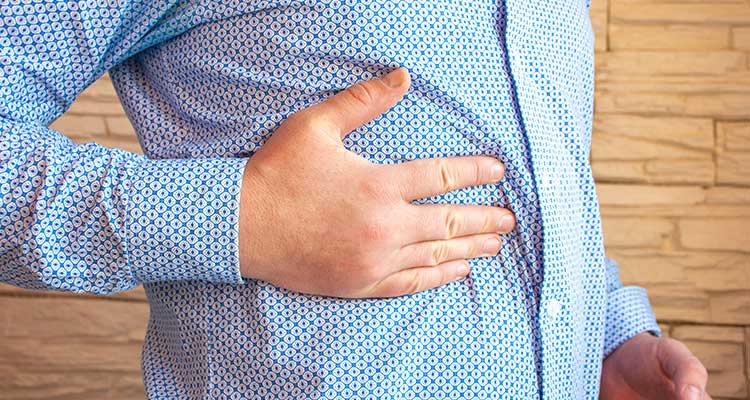
Fatty liver disease, or hepatic steatosis, is a condition characterised by the accumulation of fat within liver cells. The liver plays a vital role in digestion, nutrient metabolism, detoxification and regulation of blood clotting. When fat content exceeds 5% to 10% of the liver’s weight, the condition may develop. In Portugal, approximately 15% of adults are affected, while globally prevalence reaches 20% to 30%, with a higher incidence in adult men and postmenopausal women.
In most cases, fatty liver disease is asymptomatic. However, some patients may experience fatigue and pain in the upper right quadrant of the abdomen, as well as loss of appetite, nausea or vomiting. Advanced forms may present with jaundice, fever or ascites (accumulation of fluid in the abdomen), indicating significant liver inflammation.
The main causes include:
- Alcohol consumption: excessive intake promotes the rapid accumulation of fatty acids in the liver;
- Non-alcoholic fatty liver disease (NAFLD): associated with obesity, diabetes and elevated cholesterol or triglycerides;
- Medications and toxins: corticosteroids, amiodarone, antiretroviral drugs, mushrooms or chemical substances;
- Genetic predisposition: increased risk in certain families;
- Other rare causes: rapid weight loss, artificial nutrition and metabolic disorders.
Diagnosis is usually made by abdominal ultrasound, which may reveal liver enlargement, and blood tests showing abnormalities in liver enzymes (transaminases). In uncertain cases or to assess disease severity, a liver biopsy may be required to confirm the diagnosis.
There are no specific medications for the treatment of fatty liver disease. Management is based on lifestyle changes, including weight loss, regular physical activity, a balanced diet rich in fruit, vegetables and fibre, avoidance of excessive saturated fats and complete abstinence from alcohol. Control of associated conditions such as diabetes, hypercholesterolaemia and hypertriglyceridaemia is also essential. In the early stages, the condition is reversible with these measures.
Although most cases follow a benign course, progression to cirrhosis may occur, particularly in elderly individuals, patients with diabetes or those with liver inflammation (non-alcoholic steatohepatitis). Prevention relies on maintaining a healthy lifestyle, weight control, regular physical activity, moderation of alcohol intake and a balanced diet.
- Dra. Ana Margarida Vieira
- Dr. André Sancho Ramos
- Dr. Bruno Peixe
- Dra. Helena Tavares de Sousa
- Dra. Maria Margarida Sampaio
- Dra. Patrícia Queirós
- Dra. Ana Rita Herculano
- Dr. André Sancho Ramos
- Dr. Diamantino Sousa
- Dr. Francisco Açucena
- Dr. Horácio Guerreiro
- Dr. Mário César
- Dr. Horácio Guerreiro
- Dra. Ana Rita Herculano
- Dra. Carla Sousa Andrade
- Dra. Isabel Jardim
- Dra. Joana Carvão
- Dr. Luís Jasmins
- Dr. Nuno Ladeira
- Dra. Rosa Neto da Silva
- Dr. Vítor Magno Pereira